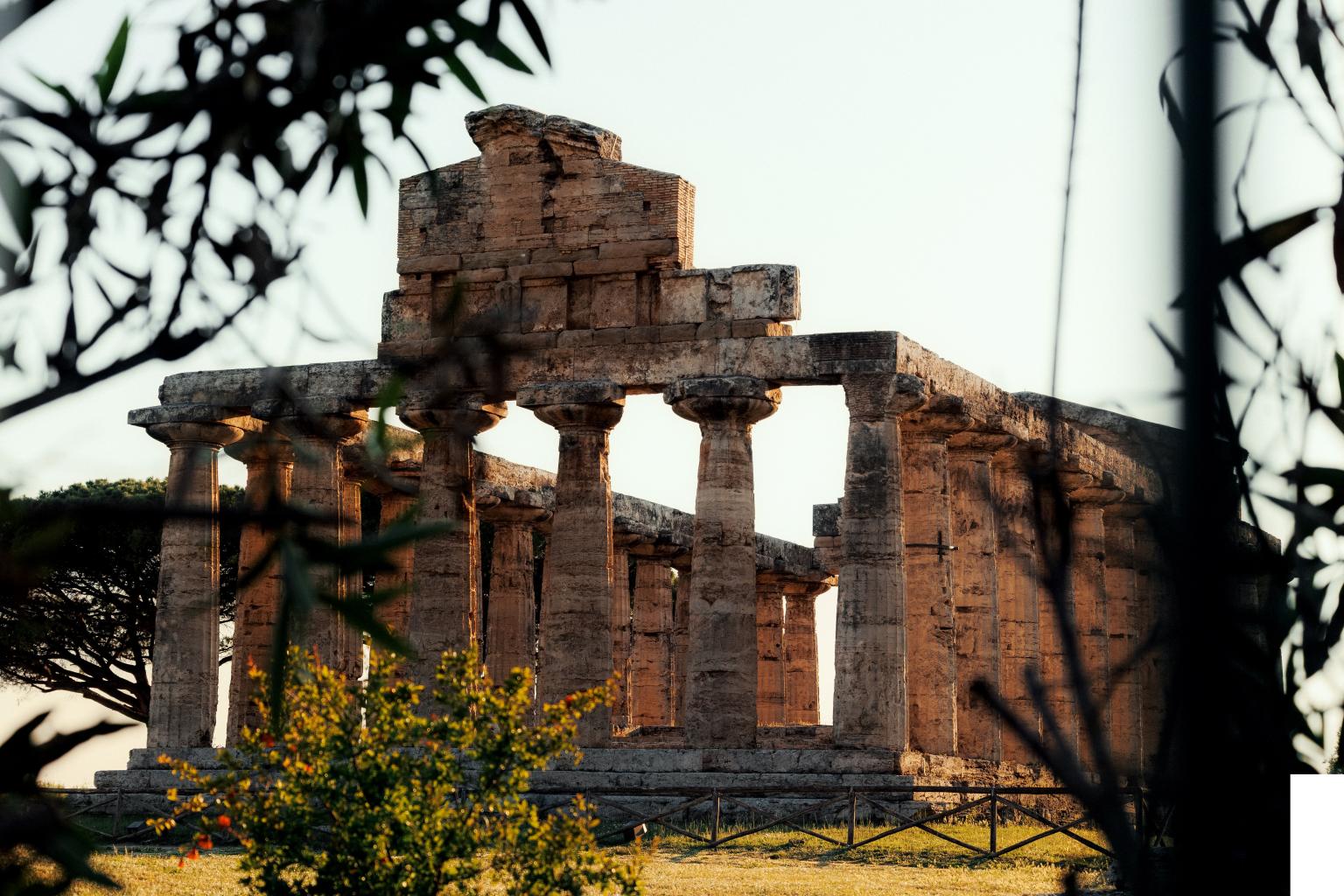
When we talk about Paestum, the imagination immediately runs to its monumental temples, icons of Magna Graecia and among the best preserved archaeological complexes in the world. But reducing Paestum to a simple archaeological site would be limiting. Paestum is a macro-destination capable of combining millenary history, culture, fascinating legends and some of the most beautiful beaches in Campania, offering a complete and surprising travel experience. A place where the past dialogues with the present, where the sea meets myths and every visit becomes a story.
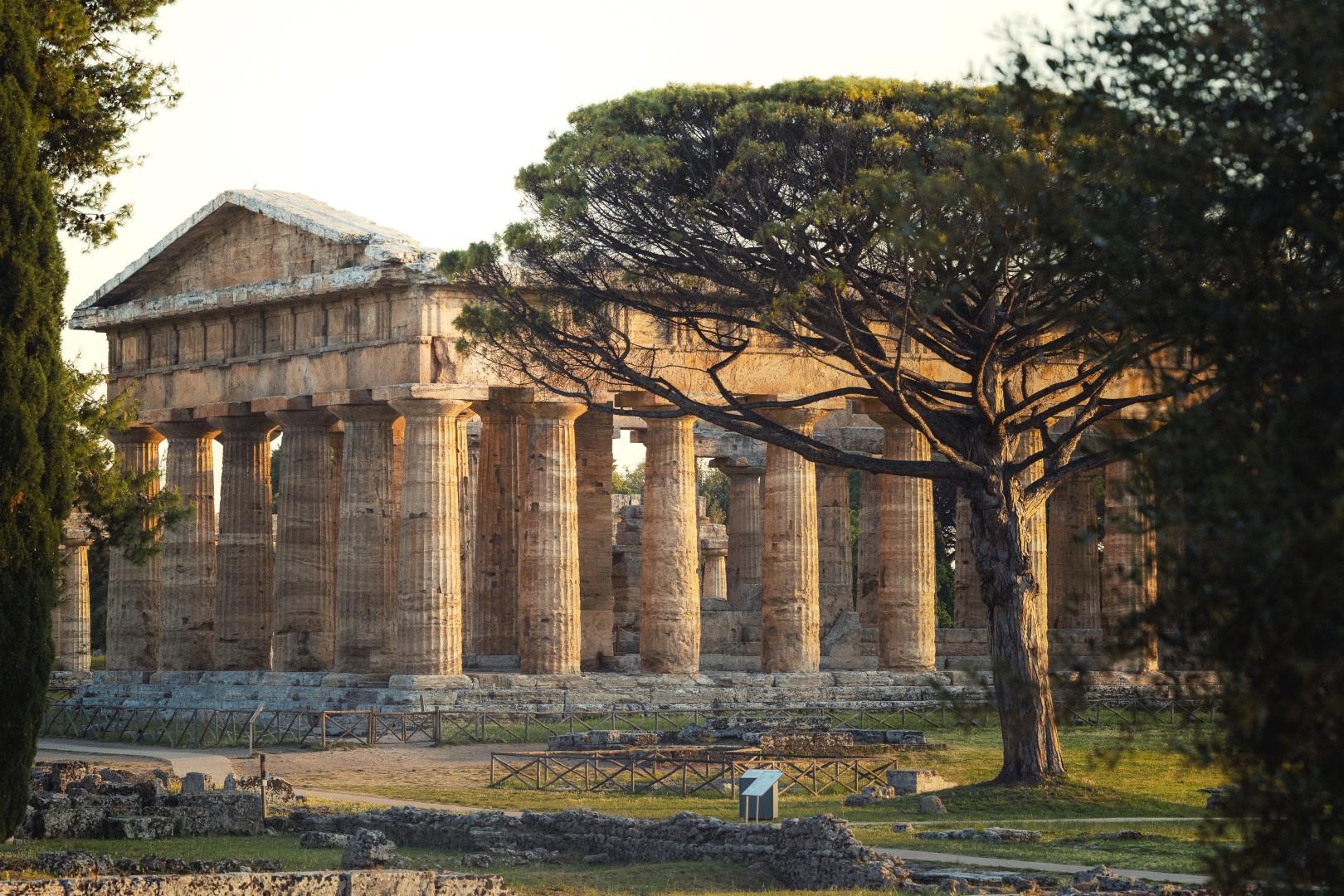
The Archaeological Park of Paestum hosts three extraordinary Doric temples: the Temple of Hera, the Temple of Athena and the famous Temple of Neptune, the absolute symbol of the ancient city, founded by the Greeks with the name of Poseidonia in the 6th century BC. The so-called Temple of Neptune, in reality, was not dedicated to the god of the sea. The attribution is the result of an error that dates back to the eighteenth century, but the name remained, helping to fuel its charm and legendary aura. Walking among these columns, especially at sunset, when the limestone turns gold and pink, is an experience that goes beyond a simple cultural visit.
Alongside the official history, Paestum preserves a rich heritage of legends and symbolic tales, handed down over the centuries and deeply linked to the cult of the gods. The oldest temple, traditionally dedicated to Hera, was considered sacred especially to women. According to legend, brides offered locks of hair or votive gifts to the goddess to ask for fertility and protection over their marriage. It is said that anyone who dared to desecrate the temple was punished with sudden storms, interpreted as signs of divine wrath. A legend has it that those who desecrated the temple of Hera were punished with sudden storms, interpreted as signs of the goddess's divine wrath.
As regards the temple of Neptune, despite the historical error, the link between the temple and the sea has entered the collective imagination. A popular legend has it that Poseidon protected Paestum from invasions from the sea, unleashing violent waves against the enemies.
On windy days, the sound of the sea that reaches the archaeological area is still poetically interpreted today as the "breath of God". On windy days, the noise of the waves that reaches the archaeological area is still poetically interpreted today as the "breath of the god" who watches over the city .
The temple of Athena, goddess of wisdom and military strategy, was linked to the young warriors of the polis. Tradition says that the soldiers stood in silence in front of the temple before leaving for war, asking for protection and clarity. According to legend, anyone who left without honoring the goddess was destined for an adverse fate. One of the most evocative legends has it that, on full moon evenings, the columns of the temples "whisper" the stories of the ancient inhabitants of Poseidonia. A story perhaps born from the wind that creeps through the ruins, but which makes the atmosphere even more evocative. According to legend, anyone who left without honoring Athena was destined to an adverse fate, a sign of how the sacred was intertwined with the daily life of the ancient inhabitants of Poseidonia. A particularly evocative story has it that, on full moon nights, the columns of the temples "whisper" the stories of the ancient inhabitants, a myth perhaps born from the wind that creeps through the ruins, but still capable today of making the atmosphere unique.
The cultural experience continues in National Archaeological Museum of Paestum , which houses finds of extraordinary value, including the famous Tomb of the Diver, the only example of figurative Greek painting with a symbolic subject that has come down to us. The Tomb of the Diver is considered one of the greatest enigmas of ancient art: the dive is interpreted as a symbol of the passage from life to death, a profoundly Mediterranean image.
The territory around Paestum tells a story made of stratifications: Greeks, Romans, the Middle Ages and peasant civilization coexist in a landscape that still retains an authentic identity. A few minutes from the archaeological area there are kilometers of sandy, wide and golden beaches, washed by a clear sea, often awarded the Blue Flag, the main locations are: Laura, ideal for families and equipped establishments; Licinella, perfect for those looking for open spaces and crystal clear waters; Torre di Paestum, wilder and immersed in nature. Here tourism is still slow and sustainable, far from the crowds of the busiest destinations, perfect for those seeking relaxation and authenticity. But Paestum is also synonymous with buffalo mozzarella from Campania DOP. The area is dotted with historic dairies where you can watch artisanal processing and taste the freshest products. The local cuisine combines sea and land: blue fish, Paestum artichoke, extra virgin olive oil and Cilento wines tell of a simple but intense gastronomic tradition.